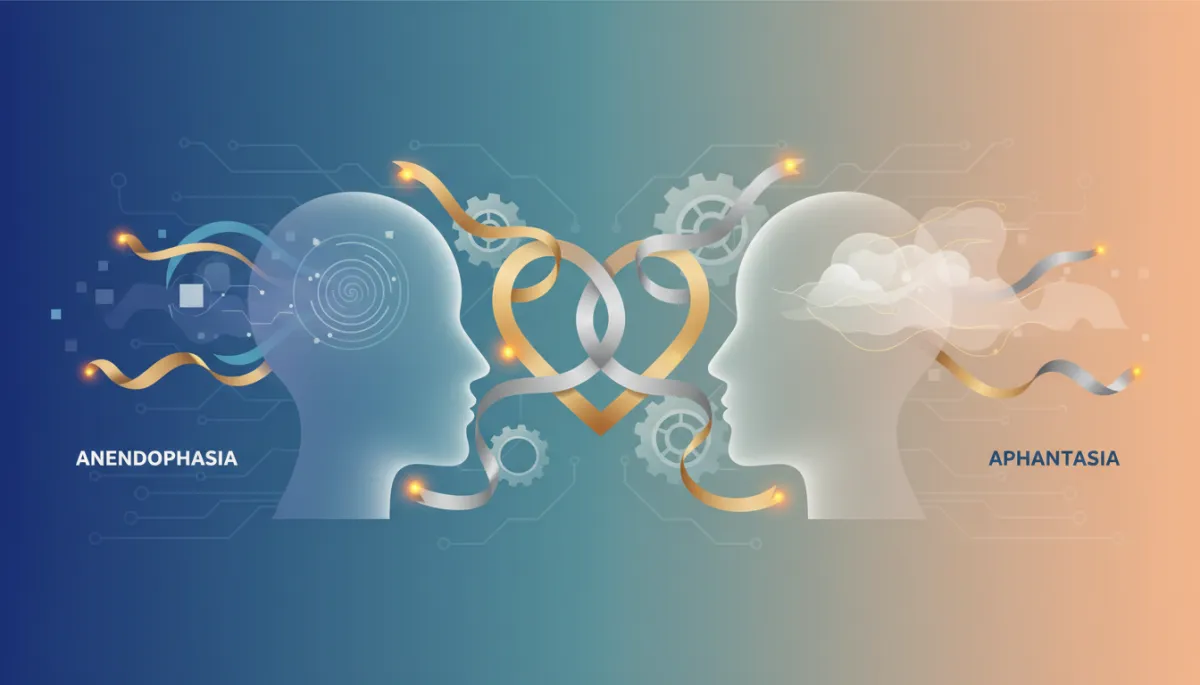
Guide for Couples: Navigating Anendophasia & Aphantasia
Relationships, Neurodiversity, Emotional Wellness, Sobriety
Same Love, Different Minds: A Short Guide for Couples Navigating Anendophasia & Aphantasia
Love doesn’t require two identical minds. It asks for two people willing to learn each other. If you or your partner live with anendophasia, aphantasia, or both, your inner worlds may work differently—but your capacity for deep, secure, life-giving connection is absolutely intact. This guide from Life Flow Academy is here to help you understand those differences, reduce shame and confusion, and turn them into strengths inside your relationship and your recovery journey.
Same Love, Different Minds

Learning each other’s inner world, one honest moment at a time
What Are Anendophasia and Aphantasia?
Many high-performing, sensitive people reach adulthood assuming everyone’s inner world feels like theirs. When they discover terms like anendophasia and aphantasia, it can feel both relieving and disorienting—especially in relationships where communication and emotional intimacy are already tender spots, particularly in early sobriety.
Anendophasia: When the Inner Voice Is Quiet or Absent
Anendophasia refers to having little or no inner verbal monologue. Many people narrate life in their heads—rehearsing conversations, hearing their own voice think, or mentally “talking through” decisions. If you have anendophasia, that stream of inner words may be faint, fragmented, or simply not there at all. You still think, feel, and decide—you just don’t do it through a constant inner conversation.
Instead, your thinking may be more sensory, intuitive, or conceptual. You might “just know” something without a sentence attached. You may struggle to instantly put complex feelings into words, not because you lack depth, but because your mind doesn’t naturally process in language first.
Aphantasia: When the Mind’s Eye Is Dim or Dark
Aphantasia is the inability (or limited ability) to create mental images. When someone without aphantasia closes their eyes and “imagines a beach,” they may see waves, sand, and sky in their mind’s eye. With aphantasia, that mental picture may be extremely faint—or not there at all. You might understand “beach” as an idea, memory, or fact, but not as a vivid internal movie.
Aphantasia doesn’t mean you lack imagination or creativity. It simply means your imagination works through concepts, emotions, logic, or bodily sensations more than through visual images. You may be brilliant at strategy, pattern recognition, or emotional attunement, even if visualization exercises feel flat or confusing.
💡 Gentle reminder: Anendophasia and aphantasia are differences, not defects. They’re variations in how the brain processes inner experience—not evidence that you are “broken” or “emotionally unavailable.”
How These Traits Shape Emotional Experience and Relationships
In the coaching work we do at Life Flow Academy, we see a common pattern: one partner experiences intense inner dialogue and vivid imagery; the other experiences thoughts and feelings more quietly, abstractly, or physically. Both are capable of deep love—but they may express and access that love differently.
Emotional Experience Without a Loud Inner Voice
If you have anendophasia, you might:
Feel emotions as body sensations (tight chest, warm stomach, restless hands) more than as words or stories.
Struggle when a partner asks, “What are you feeling right now?” and expect an instant, articulate answer.
Need more time to find language for complex internal states, especially in conflict or high emotion.
Be misunderstood as “shut down,” “emotionless,” or “not trying” when you’re actually overwhelmed by the demand to verbalize.
For a partner who lives with a rich inner monologue, silence can feel like distance. They might assume, “If you loved me, you’d have words. You’d explain.” This misunderstanding can be especially painful in early sobriety, when both partners may already feel raw, guarded, or unsure how to communicate without substances as a buffer.
Emotional Experience Without a Vivid Mind’s Eye
If you have aphantasia, you might:
Remember important moments as facts, meanings, or feelings, not as mental pictures you can “replay.”
Feel confused when your partner says, “Can’t you see it? Just visualize our future together.”
Find guided visualizations, memory exercises, or “picture your happy place” practices frustrating or flat.
Worry that not “seeing” your partner in your mind means you don’t love them enough—when in reality, your love lives in felt presence and values, not in mental movies.
Your partner, especially if they visualize easily, might misinterpret this as a lack of sentimentality, romance, or depth. They may say, “I replay our first date in my head all the time,” and feel hurt that you don’t experience it the same way—even though the memory sits just as deeply in your heart.

Learning each other’s inner language can transform confusion into clarity and safety.
The Hidden Strengths These Traits Bring to Love
In the Life Flow Academy approach, we’re less interested in “fixing” traits and more interested in harvesting their gifts. Anendophasia and aphantasia come with real challenges, but they also bring strengths that can be powerful inside a relationship—especially one healing and growing beyond addiction.
Less mental rumination: Without a loud inner monologue, some people experience less spiraling self-talk. This can support emotional regulation and reduce overthinking in conflict—if both partners understand what’s happening internally.
Present-moment focus: Many people with aphantasia are naturally anchored in the here-and-now. They may be especially good at showing love through concrete actions rather than elaborate fantasy or nostalgia.
Conceptual and intuitive intelligence: Thinking in concepts, patterns, or felt-sense can make you a powerful problem-solver and an intuitive partner, even if you struggle to narrate your process step-by-step.
Action-oriented care: Instead of living mostly in stories or images, you might naturally express love through doing—showing up, following through, creating stability. For a partner healing from chaos or addiction, this can be profoundly healing.
When both partners learn to see these traits as part of each other’s design rather than as moral failings, the relationship shifts from “Why aren’t you like me?” to “Teach me how love feels inside your mind and body.”
Learning Each Other’s Translation System
Every couple has a “translation system”—the way inner experience gets turned into words, gestures, and choices. When anendophasia or aphantasia is part of the picture, this translation system may need more intentional attention, especially in early sobriety when both nervous systems may be more sensitive and less practiced at raw, sober communication.
Step 1: Name What’s True—Without Blame
A powerful starting point is simply naming these traits together:
“My mind doesn’t run on a constant inner voice. I often need extra time to find words.”
“I don’t really see pictures in my head. I understand things more as ideas and feelings.”
Naming this out loud reduces shame and stops both of you from filling in the gaps with painful stories like “You don’t care” or “I’m too much.”
Step 2: Ask, “How Does Love Travel Best Between Us?”
Think of love as a message that needs the right channel. If one of you doesn’t think in pictures, long visual metaphors might miss the mark. If one of you doesn’t have a constant inner monologue, intense “talk it out right now” demands can flood the system. Explore questions like:
“When you feel most loved by me, what am I usually doing or saying?”
“If words are hard in the moment, what’s one simple phrase you can say to let me know you’re still here with me?”
“If visualization doesn’t work for you, how do you like to imagine or plan our future?”
Step 3: Build a Shared Vocabulary of Simple, True Statements
For many couples we support at Life Flow Academy, the breakthrough isn’t in grand speeches—it’s in short, emotionally truthful sentences that are easy to access even when the nervous system is activated. Statements like:
“I care about you, even if I’m quiet right now.”
“I’m overwhelmed and need a little time, but I am not leaving this conversation.”
“I can’t picture it, but I like the idea of building that future with you.”
These phrases become a bridge between inner experience and shared reality—a simple translation tool you can reach for instead of shutting down or exploding.
Practical Tools: Small Phrases, Big Shifts
“Thank You for Saying That. I’m Receiving It.”
One simple practice we often share at Life Flow Academy is this phrase: “Thank you for saying that. I’m receiving it.” It’s especially powerful for couples where one or both partners don’t naturally experience vivid inner images or constant inner words.
When your partner offers a compliment, an apology, or an expression of care, your brain might not automatically replay it or visualize it later. Saying, “Thank you for saying that. I’m receiving it,” does three important things:
It reassures your partner that their effort landed, even if you don’t show a big emotional reaction on the surface.
It reminds you to consciously register the moment, instead of letting it slide past unnoticed.
It creates a micro-ritual of receiving love—a vital skill in recovery, where many people are used to deflecting or numbing positive feelings.
💡 Try this today: The next time your partner says something kind, pause. Make eye contact if possible and say, “Thank you for saying that. I’m receiving it.” Notice what shifts in your body, even if just 1%.
Sharing Specific, Emotionally Truthful Statements
If big emotional talks feel overwhelming, aim for small, specific truths. You don’t need a full essay about your inner world. Start with one clear sentence that is honest and kind. For example:
“I don’t have a lot of words yet, but I want you to know I’m trying to understand you.”
“I can’t picture what you’re describing, but I can feel how important it is to you.”
“Right now my body feels tight and anxious. I think I need a slower pace for this conversation.”
These statements do not require a vivid inner movie or a constant inner narrator. They simply require you to check in with your present-moment experience and name one piece of it. Over time, this practice strengthens both emotional literacy and relational trust.
Small, Consistent Efforts: Building Safety, Effort, and Connection
In recovery and in relationships, transformation rarely comes from one dramatic conversation. It comes from small, repeatable actions that signal, “I am here. I am trying. I care.” When your inner world works differently, those small actions matter even more, because they become your clearest translation of love into behavior.
Fostering Safety
Set expectations around processing time. Agree on phrases like, “I need 20 minutes to sort my thoughts, then I’ll come back,” so silence doesn’t feel like abandonment or punishment.
Normalize differences. Instead of “Why can’t you just say what you feel?” try “I know words are harder for you. What’s one thing you can share right now?”
Showing Effort
Create tiny rituals of connection. A nightly check-in with one sentence each: “One thing I appreciated about you today was…” helps both partners practice giving and receiving, regardless of inner imagery or monologue.
Use written words if spoken ones are hard. Texts, notes, or shared journals can be powerful for someone who struggles to improvise emotionally rich language on the spot.
Deepening Connection
Ask curiosity-based questions. “What does love feel like in your body?” or “When do you feel closest to me?” invites your partner to describe their experience in their own language, not yours.
Celebrate attempts, not perfection. When your partner reaches for a new phrase or shares something vulnerable, respond with warmth: “Thank you for telling me that. I know it’s not easy.”
📌 Key takeaway: You don’t need identical minds to build a secure, nourishing relationship. You need willingness, curiosity, and small, consistent actions that honor how each of you is wired.
Bringing It All Together in Sobriety and Beyond
For many couples in early sobriety, discovering anendophasia or aphantasia can stir old fears: “Was I using alcohol to compensate for something broken in me?” or “Will anyone ever really understand how my mind works?” At Life Flow Academy, we see these traits differently. They are part of your design, not evidence of damage. The work is not to become someone else—it’s to build a life and a relationship that fully include who you already are.
As you move from simply surviving sobriety to creating a fulfilling life, your relationship can become one of your greatest sources of regulation, meaning, and connection. Understanding each other’s inner world—including how you think, feel, and imagine—helps you:
Reduce unnecessary conflict rooted in misunderstanding rather than in actual misalignment.
Replace shame (“I’m bad at feelings”) with accuracy (“My brain doesn’t narrate or visualize like yours, and that’s okay.”).
Create communication habits that honor both nervous systems and both inner landscapes.
You deserve a relationship where your way of thinking is not just tolerated but respected and understood. You deserve a partner who can say, “I may not experience it the way you do, but I want to learn your language.” And you deserve to offer that same curiosity in return.
Your Next Step: Build the Life Beyond Sobriety, Together
If you recognize yourself or your partner in this guide—if you’re navigating sobriety, complex inner worlds, and the desire for deeper connection—you don’t have to figure it out alone. At Life Flow Academy, we help high-performing individuals and couples move beyond simply not drinking into building relationships and lives that feel worth protecting.
Together, we can explore your unique translation systems, practice simple, emotionally truthful communication, and design rituals that support safety, effort, and connection—without asking either of you to become someone you’re not. Your minds may work differently, but your love can still move in the same direction.
Ready to go further? Build the life beyond sobriety. Start your journey from surviving sobriety to creating a fulfilling life—for yourself and for your relationship.