ABCs of Mental Health: Self-Awareness, Belief, Care
Mental Health, Recovery Coaching, Life Flow Academy
The ABCs of Mental Health : Self-Awareness, Self-Belief, and Self-Care
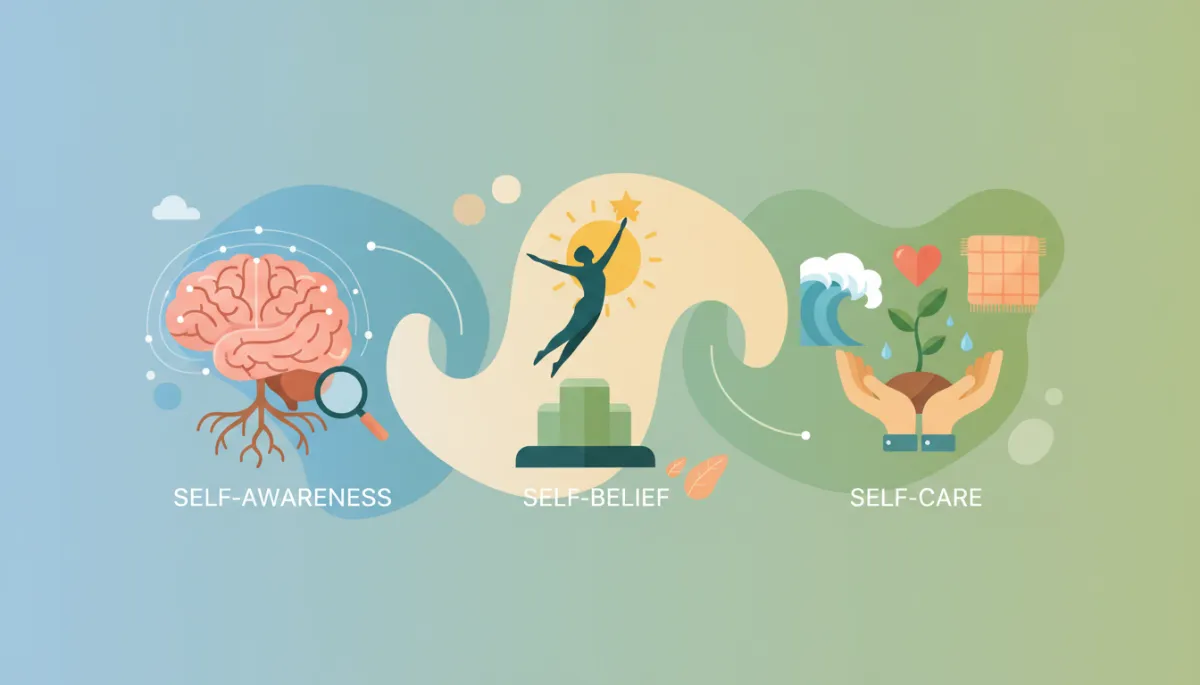
Mental health can feel complicated, especially in early sobriety when the noise of alcohol or substances has quieted, but your inner world suddenly feels louder than ever. At Life Flow Academy, recovery coach and integrative behavioral health specialist Devon A. Fitzpatrick, MSW, LSW, offers a grounded framework to navigate this season: the ABCs of mental health—Self-Awareness, Self-Belief, and Self-Care. These three foundations work together to help you move beyond simply surviving sobriety and begin building a life you actually want to live.
Why Mental Health Feels Different After You Get Sober
![generate momre images to fully illustrate what are the ABCs is all about [Brand guidelines: use brand color palette #64c4ed, #fafafa, #1a1a1b, #4caf50, #ffb74d]. Context: This is for a blog post about "The ABCs of Mental Health with Devon A. Fitzpatrick, MSW, LSW: Self-Awareness, Self-Belief, and Self-Care". Style: Professional quality, photorealistic, high resolution](https://images.leadconnectorhq.com/image/f_webp/q_80/r_1200/u_https://storage.googleapis.com/funnel-ai-production/blog-ai/Ywh3HuehG1jPoKdGrWAM/blog-1789112218535-egj04h.png "generate momre images to fully illustrate what are the ABCs is all about [Brand guidelines: use brand color palette #64c4ed, #fafafa, #1a1a1b, #4caf50, #ffb74d]. Context: This is for a blog post about \"The ABCs of Mental Health with Devon A. Fitzpatrick, MSW, LSW: Self-Awareness, Self-Belief, and Self-Care\". Style: Professional quality, photorealistic, high resolution")
Many high-performing professionals expect that once they stop drinking or using, things will finally “click.” Career, relationships, energy, and mood will all straighten out. When that doesn’t happen, it can feel confusing and discouraging. You might notice:
Anxiety that used to be numbed now shows up as racing thoughts, overwork, or perfectionism.
Emotional disconnection—being present for everyone but feeling strangely absent inside yourself.
A sense of identity confusion: if you’re not “the one who drinks,” who are you now?
Sobriety removes a powerful coping mechanism, but it doesn’t automatically give you the tools to understand yourself, regulate your nervous system, or redesign your life. That’s where the ABCs come in. Devon’s approach, aligned with Life Flow Academy’s philosophy, is simple but not simplistic: when you build Self-Awareness, strengthen Self-Belief, and practice sustainable Self-Care, you create the inner conditions for long-term mental wellness.
A is for Self-Awareness: Seeing Your Inner Landscape Clearly
Self-awareness is your ability to notice what is happening inside you—your thoughts, emotions, physical sensations, urges, and patterns—without immediately judging or reacting to them. For people in early sobriety, this can feel both confronting and liberating. Suddenly, you are face-to-face with yourself, sometimes for the first time in years.
Devon often describes self-awareness as turning on the lights in a room you’ve been walking through in the dark. The furniture hasn’t changed, but now you can see where everything is. That visibility is what allows you to move differently, more safely, and with intention instead of habit.
What Self-Awareness Looks Like in Real Life
Noticing that your “need” for a drink was actually a response to feeling overwhelmed, lonely, or afraid of failing.
Realizing that your overworking is less about ambition and more about avoiding uncomfortable emotions at home or inside yourself.
Recognizing patterns in your relationships—such as people-pleasing, withdrawing, or caretaking—that leave you feeling unseen or resentful.
In the Life Flow Academy model, self-awareness is part of the Regulate and Rediscover phases. You learn to listen to your nervous system, understand your triggers, and name the stories you’ve been living inside of—stories about success, worthiness, love, and what you “should” be able to handle on your own.
💡 Gentle Reminder: Self-awareness is not about blaming yourself. It’s about understanding yourself so you can choose differently.
A Practical Self-Awareness Check-In
Try pausing once or twice a day and asking yourself:
What am I feeling in my body right now? (Tight chest, racing heart, heaviness, calm?)
What emotion might be underneath this? (Anxiety, shame, excitement, grief, relief?)
What story am I telling myself about what this means? (I’m failing, I’m not enough, I’m unsafe, I’m growing?)
Over time, this simple practice helps you move from “I’m just stressed” to “I’m scared I’m going to disappoint people, and I’m using busyness to outrun that feeling.” That shift in clarity is powerful—it opens the door to choice, compassion, and change.
B is for Self-Belief: Trusting That You Are Capable of Change
Self-belief is the internal sense that you are capable of growth, worthy of care, and able to build a different future—even if you don’t know exactly how yet. For many people in early sobriety, this is the most fragile part of their inner world. You may have a track record of professional success and still feel deeply unsure about your ability to change emotional patterns, maintain boundaries, or build healthy relationships without substances in the background.
Devon sees self-belief not as blind confidence, but as a quiet, steady trust: “I can learn. I can repair. I can grow.” It’s the antidote to shame-based recovery and “just try harder” thinking. Instead of beating yourself up for struggling, you learn to speak to yourself as you would to a respected colleague or a dear friend—honest, responsible, but fundamentally on your own side.
How Self-Belief Shows Up in Recovery and Mental Health
When you have a difficult day, you don’t immediately decide it means you’re “broken” or “back at square one.” You see it as data, not a verdict.
You allow yourself to ask for support—from a coach, therapist, community, or trusted loved one—without interpreting that as weakness.
You begin to imagine a version of your life where you feel more regulated, connected, and purposeful, and you take small steps toward it.
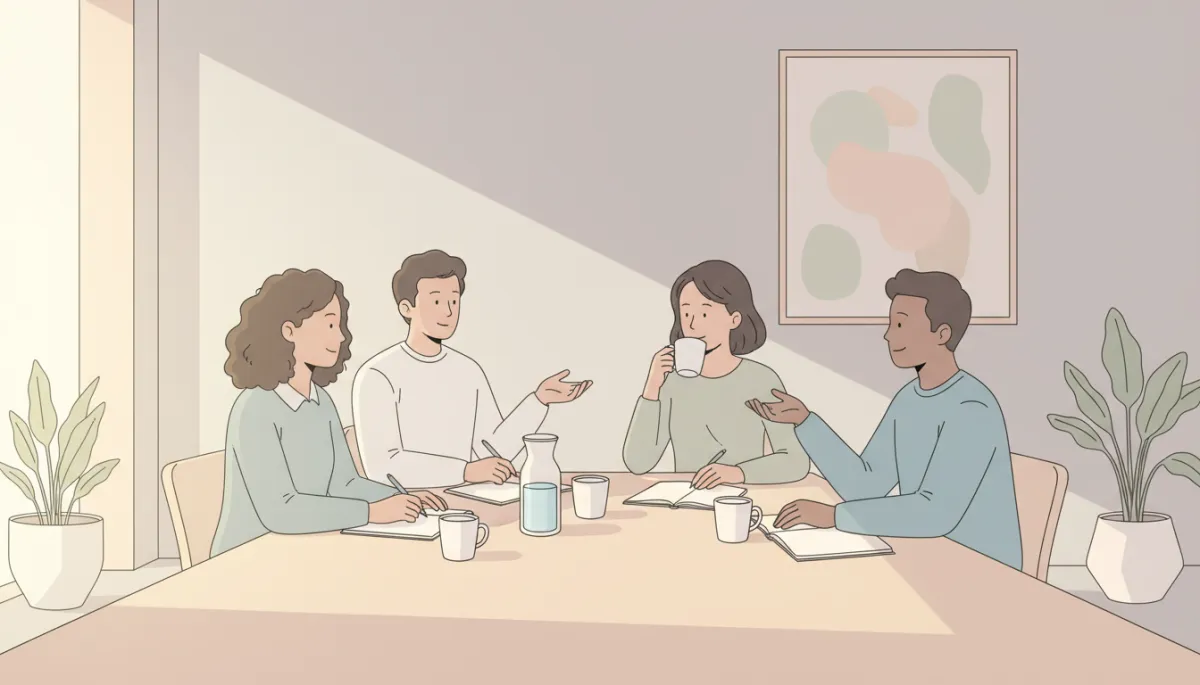
Supportive communities help rebuild self-belief by replacing shame with understanding and growth.
Rewriting the Inner Script
Many high achievers carry an internal script that sounds like, “If I can’t handle this on my own, I’m failing.” But mental health is not a solo performance. It’s a relational process—between you and your nervous system, you and your history, you and the people around you. Self-belief grows when you allow that complexity and still choose to move forward.
One way Devon helps clients at Life Flow Academy strengthen self-belief is by tracking evidence of growth, not just evidence of struggle. That might look like:
Noticing that you paused before reacting in a conflict, even if the conversation was still messy.
Recognizing that you reached out to a supportive person instead of isolating after a stressful day.
Acknowledging that you made it through a triggering event without using a substance, even if your emotions felt intense.
📌 Key Takeaway: Self-belief is built in small, repeated moments where you show yourself, “I can do hard things differently now.”
C is for Self-Care: Supporting Your Nervous System and Whole Self
Self-care has been watered down in popular culture to mean bubble baths and spa days. Those can be lovely, but Devon’s work—and the Life Flow Academy approach—goes deeper. Real self-care is about how you consistently support your nervous system, body, mind, and relationships so that you can live sustainably, not just sprint from crisis to crisis.
Nervous-System-Aware Self-Care
In early sobriety, your nervous system is often recalibrating. You may be more sensitive to stress, stimulation, or conflict than you realized. Self-care, in this context, is not indulgence—it is stabilization. It might include:
Creating consistent sleep and waking routines to support mood and cognitive clarity.
Building in brief regulation practices during your day—deep breathing, short walks, stretching, or grounding exercises before and after high-pressure meetings.
Protecting your time with boundaries around work, screens, and social commitments so you have space to process and rest.
At Life Flow Academy, this aligns with the Regulate and Redesign phases: you’re not only calming your system in the moment, you’re redesigning your lifestyle so that your default settings support your wellbeing instead of eroding it.
Self-Care That Honors Your Whole Identity
For high-performing individuals, meaningful self-care also involves honoring your values, creativity, and purpose. That might mean:
Making time for activities that are not “productive” but deeply nourishing—music, writing, nature, spiritual practices, or learning for its own sake.
Investing in coaching or therapy because your emotional health is as important as your financial health or career trajectory.
Choosing relationships where you can be honest about your internal experience, not just your achievements.
💡 Pro Tip: Ask yourself, “What would caring for my future self look like this week?” Then choose one small action that aligns with that answer.
How Self-Awareness, Self-Belief, and Self-Care Work Together
Each of these foundations is powerful on its own, but the real transformation happens when they interact. Devon often sees this as a living cycle:
Self-Awareness helps you notice what is actually happening—internally and externally—without numbing, denying, or minimizing it.
Self-Belief allows you to respond to what you notice with the assumption that change is possible and that you are worthy of support and care.
Self-Care gives you the practical tools and structures to act on that belief in daily, sustainable ways.
Over time, this cycle reinforces itself. As you practice self-care, your nervous system becomes more regulated. With more regulation, self-awareness feels safer—you can look at your patterns without being overwhelmed. As you see yourself changing, self-belief grows. And as self-belief grows, you are more willing to keep showing up for yourself, even when it’s uncomfortable.
An Example: From “White-Knuckling” to Whole-Person Wellness
Imagine a high-performing executive in early sobriety. On the outside, life looks stable: no more late-night drinking, work performance is strong, family routines are back in place. Inside, though, anxiety is high, sleep is inconsistent, and there’s a constant sense of emptiness or restlessness.
Through Self-Awareness, they begin to notice that the restlessness spikes after intense meetings or when they feel criticized. They see that the urge to escape is less about alcohol and more about intolerable emotions.
With growing Self-Belief, they start to trust that they can learn new ways to respond. They remind themselves, “I’ve done hard things before. I can learn how to be with my feelings without numbing them.”
Through consistent Self-Care, they add short nervous-system resets between meetings, start journaling to process emotions, and commit to regular connection with a recovery community. Slowly, the inner pressure begins to ease.
This is how mental wellness grows—not through one dramatic breakthrough, but through integrating awareness, belief, and care into the fabric of everyday life.
Why Integrating All Three Matters for a Balanced Approach to Mental Health
Focusing on only one of the ABCs can leave you unbalanced:
Self-Awareness without Self-Belief can feel like drowning in insight. You see all your patterns, but you don’t believe you can change them. This often leads to shame and paralysis.
Self-Belief without Self-Awareness can slide into denial or spiritual bypassing—“I’m fine, I’m strong, I’ve got this”—while you ignore the places that truly need attention and healing.
Self-Care without Self-Awareness and Self-Belief can become performative wellness. You do all the “right” things—yoga, journaling, meditation—but you don’t understand the deeper patterns they’re meant to support, and you don’t truly believe you deserve the benefits.
Integrating all three creates a balanced, whole-person approach. You understand yourself, you trust your capacity to grow, and you back that trust with consistent, compassionate action. This is the heart of Life Flow Academy’s promise: sobriety is the beginning, not the destination. The goal is not just to remove alcohol or unhealthy behaviors—it’s to build a life that makes sobriety worth protecting.
Reflecting on Your Own Mental Health Journey
Take a moment to gently check in with yourself. You might even pause and breathe slowly as you read these questions. There are no right answers—only honest ones.
Self-Awareness Reflection
When do I feel most like myself? What is happening in those moments—internally and externally?
What emotions or experiences do I still tend to numb, avoid, or outrun—even in sobriety?
Self-Belief Reflection
Where in my life do I trust my ability to grow and adapt? Where do I doubt it?
If I spoke to myself like someone I deeply respect, what would I say about the season I’m in right now?
Self-Care Reflection
What practices genuinely help my body and nervous system feel more grounded and safe? Am I making space for them consistently?
Where am I still living in survival mode, and what is one small change that would move me toward sustainable wellbeing?
📌 Key Takeaway: You don’t have to overhaul your life overnight. Awareness of one pattern, one belief, or one need is enough to begin.
Exploring Your Relationship with Substances: “Am I Truly Addicted?”
For many high-functioning professionals, the question isn’t just, “Do I drink or use too much?” but, “What role has alcohol or substances been playing in my life—and what is it costing me?” That’s where honest, structured self-reflection can be incredibly supportive.
The free self-assessment “Am I Truly Addicted?” is designed to help you explore this question without shame or drama. It invites you into deeper Self-Awareness about your patterns, your motivations, and the impact substances have had on your mental health, relationships, and sense of self. It is not about labeling you—it’s about giving you clearer information so you can make grounded decisions about your next chapter.
💡 Pro Tip: Use the “Am I Truly Addicted?” assessment as a mirror, not a verdict. Let it spark curiosity, not condemnation.
Joining a Community That Honors Your Whole Self: Sober on Purpose
Mental wellness is not meant to be built in isolation. One of the most powerful ways to strengthen Self-Awareness, Self-Belief, and Self-Care is to surround yourself with people who are walking a similar path—people who understand what it means to look successful on the outside while still feeling unsettled inside.
The Sober on Purpose community exists for exactly this reason. It’s a space where sobriety is not the finish line, but the foundation. Within this community, you can:
Share your experiences without being reduced to your addiction or your past.
Learn practical tools for nervous-system regulation, emotional processing, and lifestyle design that align with your values and ambitions.
Witness others integrating the ABCs of mental health in real time—and be reminded that you are not alone in this work.
In a world that often celebrates extremes—overwork, overconsumption, overachievement—Sober on Purpose offers a different rhythm: grounded, intentional, connected. It’s one of the ways Life Flow Academy helps people move from surviving sobriety to building a life beyond sobriety.
Moving Forward: Building the Life Beyond Sobriety
As you consider your own mental health journey, remember this: you are not a problem to be fixed. You are a whole person in the process of rediscovering, redesigning, and reconnecting with yourself and your life. The ABCs of mental health—Self-Awareness, Self-Belief, and Self-Care—are not boxes to check; they are ongoing practices that evolve as you do.
With the support of guides like Devon A. Fitzpatrick, MSW, LSW, and the integrative approach of Life Flow Academy, you don’t have to choose between being high-performing and being well. You can build a life where your nervous system is more regulated, your relationships are more authentic, your work is more aligned, and your sobriety is something you actively want to protect—not just something you’re trying not to lose.
Begin your transformation: Explore the free “Am I Truly Addicted?” self-assessment, and consider joining the Sober on Purpose community to continue growing alongside others who are committed to living fully, not just staying sober.
Wherever you find yourself today—uncertain, hopeful, exhausted, curious—know that it is enough to start. One honest moment of self-awareness, one small act of self-care, one gentle sentence of self-belief can shift the trajectory of your day. And over time, those shifts add up to something profound: a life that feels like it truly belongs to you.
Build the life beyond sobriety. Your ABCs are already within you. Now is the time to learn how to work with them—on purpose.